Thursday, March 2, 2023

Pi Day Activities

How will you celebrate PI Day on Tuesday, March 14? I'm sure you have the basic math ideas already ... but what about creative writing, games, and crafts? Here are a few ideas to consider ... 

Idea 1 - a game:

In groups, have students race to see who can be the first to roll the first 10 digits of pi. You’ll need some 10-sided dice and a template for the first 10 digits like this:

Idea 2 - a paper chain:

Create a PI DAY chain with loops of construction paper. Use a different color for each of the 10 digits. How long will your chain be?

Idea 3 - creative writing:

Write "PI-Ku" poems ... modeled after Haiku. Who can write a meaningful poem using the first 10 digits of PI?

First line: 3 syllables
Second line: 1 syllable
Third line: 4 syllables
Fourth line: 1 syllable
Fifth line: 5 syllables
And so on ... 

Idea 4 - music:

Create PI - Music. In pairs, assign students a digit 1 - 9. Let 0 = a rest. Each pair must come up with a unique sound for their digit, which might include a musical instrument if those are handy, electronic notes if computers are available, or tapping, clapping, or banging. Display the first 20 (or more digits of pi). Students "play" their sound when you point to a digit. Practice your PI symphony until students can play it smoothly.

Idea 5 - art:

Using graph paper, fill in the blocks based on the first 20+ digits of PI. Color the books black. Then wash the paper with watercolors to represent the sky.


Idea 6 - word fun:

In pairs or small groups, ask students to brainstorm as many words as they can that start with PI-.  Then go around the room, each pair or group naming a unique word until there is a last group with one more PI- word.  That group wins the prize!

Check out these books - for added fun!


Wednesday, March 1, 2023

Introducing Quadratics

 It is late in the year to introduce quadratics. These ideas might be something to save for next year.

How can you activate multiple intelligences and involve students in thinking deeply about quadratics? Try using a variety of activities - hands-on, computer simulation, reading, critical thinking and/or a video.

What do you wonder, notice? Examining pictures


Starburst Lab - Discover the pattern


Essay to Read - 101 Uses for a Quadratic Equation


Video to Watch - Quadratics/Parabolas in the Real World

Guided Discovery - Will It Hit the Hoop Desmos Activity


Then use this chart to organize basic properties - it will prompt you to make a copy.


Looking for challenging problems?

 Check out Reflections and Tangents postings of "old" calendar problems! Search the name of the month in the search box on her blog. Here are two samples ... 


Saturday, January 7, 2023

Closures - How you know they know ...

Almost two weeks ago I wrote about "hooks" also known as anticipatory sets or  sometimes called warm-ups. The first few minutes of a lesson are critical for establishing student interest and engagement.

But what about closures?!?

Math By the Mountain has developed several posts about the significance of using exit tickets in secondary math classes.

Shelli created an awesome set of prompts for exit tickets ... check them out here.  Her prompts could be used not just for exit tickets but also for journal writing!

Sarah shared 25+ Exit Ticket Templates at Math Equals Love.

Ditch That Textbook has curated 20 ideas for Exit Tickets - not all math, but clearly, they might spark your own creativity!

Here are a few other ideas besides exit tickets - 

The Stoplight Method works - students can post a response to a prompt as they are leaving.  Check out this one minute video description.

Around the Room is another one - students pass a ball around the room, stating one thing they learned that day.

What's Inside - pairs/groups of students receive an envelope and inside could be a vocabulary word, a concept, a problem.  Students explain the connection to the lesson.

There are many more.  Check out these lists:
Tips on Leaving a Lesson Effectively

@LeeanneBranham mentioned the suggestion to start the next lesson with a closure to the previous one and she shared a 3-2-1 that worked for her.
Beginnings and endings are significant - and possibly the moments we plan for the least.

What ideas do you have to share?  How do you reserve 5 to 10 minutes for closure consistently?

Monday, December 26, 2022

Beginnings - The HOOK!

Brian Sztabnik is a highly recognized AP English Teacher. Here’s his quote about the first and last eight minutes of class:


That is the crux of lesson planning right there—endings and beginnings. If we fail to engage students at the start, we may never get them back. If we don’t know the end result, we risk moving haphazardly from one activity to the next. Every moment in a lesson plan should tell.


The eight minutes that matter most are the beginning and endings. If a lesson does not start off strong by activating prior knowledge, creating anticipation, or establishing goals, student interest wanes, and you have to do some heavy lifting to get them back. If it fails to check for understanding, you will never know if the lesson’s goal was attained.**


How do you engage or HOOK students in the first few minutes of class? One of my favorite ways was to use videos ... visual stimuli attract students' attention. Several years ago, I compiled a list of favorite Youtube videos that worked for my Algebra 2 curriculum.  You can access the file here.


You'll notice certain sources are repeated!  Check out these sources for videos that fit your curriculum:

TED
Ted Ed
Numberphile
Vi Hart

Do you have a video that inspires students in math class?  If so, share the title/link in the comments!

And if you are looking for even more ideas ... check out these resources for hook strategies!

**(Sztabnik, B. (2015, May 1). The 8 Minutes That Matter Most. Edutopia. https://www.edutopia.org/blog/8-minutes-that-matter-most-brian-sztabnik)  
  

Thursday, December 22, 2022

Tips for January Back to School!

 Returning to school after the winter break can be challenging for everyone. 

  • Not everyone had a happy holiday; some students may have experienced great disappointments
  • If you feel reluctant, imagine how your students might feel the same way
  • It's hard to get back into the groove of a regular school schedule
You can surely expect your middle/high schoolers to be tired!

So how can you engage your students on that very first day? Here are ideas to think about - hopefully, they will spark your own creative ideas! Specifically, plan an "easy" first day back that provides opportunities for success, connection, and relationship building ...
  1. Start with a review game, including various problems from the first semester but especially some easy ones.  Make the game fun - Mrs. E Teaches Math has a free set of game cards (sign up, free download) that adds a strong element of chance and fun.  
  2. OR start January with a math debate.  Math is the most important subject. We don't need math now that we have portable computers (phones). Math is not relevant to our everyday lives. What was the most difficult topic you learned in first semester? If you have been studying parent functions - what is the coolest parent function you've learned so far? OR check out this plethora of debate topics provided free!
  3. OR use the New York Times Learning Network guest opinion piece and writing prompt to explore the value of learning math.
  4. OR use this first day back to explore mathematical mindsets.  Use the guide at YouCubed!
  5. OR  If you already know your class likes mystery, intrigue, puzzles, start the new semester with a puzzle day - a day to warm up the brain!  Sarah Carter (Math=Love) has a treasure trove of puzzles
  6. Use the first class period or two to set fresh goals for the new semester. Students might review their work portfolio, grades, or work habits to determine areas to strengthen. Math Giraffe has a great post on teaching "smart" goals, a doodle worksheet to share, and tips for making it work in your classroom. "Teaching Expertise" suggests 20 ways to do goal setting if you are looking for another idea!


Most importantly, come to class with an attitude worth sharing!  Spend a few minutes before that first day back listing your top three reasons for teaching. Organize your first week's outfits so those mornings are not so difficult. Buy a few healthy treats to add to your desk stash so that you have something to enjoy if/when you get a break in your day. Last, plan easy dinners for those few days back ... freezer meals, crock pot delights, your neighborhood eatery!  A little self-care can go a long ways to a successful first week back to school!

Please add your ideas to the comments section - 


Sunday, December 4, 2022

number sense in secondary education

Usually, when I think of building number sense, I think about primary math education.  I know, though, number sense is something we all must work on all the time!  I'm curating ideas for secondary math and building number sense.

  1. Knowing how precisely a high school freshman can estimate the number of objects in a group gives you a good idea of how well he has done in math as far back as kindergarten, researchers at Johns Hopkins University found.  This Science Daily article is quite interesting.

  2. This is a go-to book for ideas: Building Powerful Numeracy for Middle and High School Students, written by Harris and published by Heinemann.  

  3. This site says it's a community for number string design!

  4. The state of Texas has a well-developed academic competition developed by the University of Texas - one of which is number sense.  Practice tests are available online here.

  5. The San Francisco Unified School District Math Department has put together a page full of resources on number talks. Check it out!

  6. Fawn Nguyen put together this set of 90-number talks for middle schoolers — enough for a full school year if you do this routine every other day.
What tools, routines, or materials do you use to build number sense in secondary students? How often do you work on number sense? How important is it in your math program?


Friday, December 2, 2022

Writing in Math Class

Reading and writing in math class helps to build, solidify, and deepen students' understanding of math concepts. In this post I share a few examples that I hope will spark your own ideas.

Writing frames support all math students in constructing short responses.  These writing frames from science can be adapted to math.  Here are 3 samples!  These samples are simplistic but great for teaching the structure of writing short responses!

Here are some specific examples of algebra 2 topics:

Rational functions, What is the horizontal asymptote of this function? Show this on the graph. What does this value represent in terms of the problem posed?  Considering the problem, why does your value for the horizontal asymptote make sense?

Exponential unit: You have a rich Uncle that gives you $5000 to invest. You have researched two different banks to see which you want to use to help you make the most money. Describe when it would be better to choose MK Federal Credit Union and when it would be better to choose MCB National.

Square root unit: Does doubling the length of the skid double the speed the driver was going? Justify your response using tables, symbols, and graphs.

Project idea: Read an article about mathematics or a mathematician in the New York Times (http://topics.nytimes.com/top/news/science/topics/mathematics/). Create a mini-poster that illustrates the article. Include a “3-Part Source Integration” writing. A “3-Part Source Integration” is a three-sentence statement that includes the text's title, author’s name, author information, source material that is either paraphrased or directly quoted, and a brief statement explaining the significance of the paraphrase or quotation.

Past examples of students' writing ...  a blog post

I find that these short writing opportunities provide windows into students' thinking.  How do you use short writing prompts?

In the article "Advanced Math? Write!" the author stresses starting small.  She emphasizes journal writing.  I have not tried journal writing with 150 students.  Even when I had considerably fewer students, I found keeping up with responses to journals challenging.  How could I begin journaling with students without feeling overwhelmed?


Thursday, December 1, 2022

Sharing Research With Our Students

When I was teaching high school, I asked my students to read a summary of Make It Stick by Peter Brown (or watch a video summary). Then I asked them what they noticed, what they wondered.  Here are a few of their ideas.

What I notice:
  • “Make it Stick” focuses on how the student thinks about learning and goes about learning rather than how the material is taught
  • A majority of the chapters focus on how the student review or practice the content.
  • Academic skill revolves more around environment and effort.
  • I notice how the author mentions that cramming information before a test the next day isn’t as potent as people believe.
  • I also notice how he mentions retrieval practice and how it should be more spread out.
  • I believe I have experienced “the illusion of knowing” after re-reading content as a study strategy
  • When I study, I notice that using the retrieval method is more difficult than other methods
What I wonder:
  • Can someone pick up study skills or do they have to be developed over time?
  • Do genetics still influence how well someone does academically?
  • Does involvement in other non-academic activities have a positive influence on academic development?
  • Is a certain type of learning more powerful/memorable than another or if it is specific to the person?
  • Why does spacing out study sessions make your learning more potent causing your memory and learning to be stronger?
  • I wonder why arduous effort in retaining memory is more effective than memorizing something. 
  • I also wonder why i’ve never been taught this before as it provides great information on how to keep your grades in superb shape.
  • How were these studying strategies thought of, and how many people did they test them on?
  • I wonder if there are any methods even more effective than retrieval practice?

 Brown, P. (n.d.). Make it stick: The science of successful learning

How do you share the research you read with your students?

Sunday, January 30, 2022

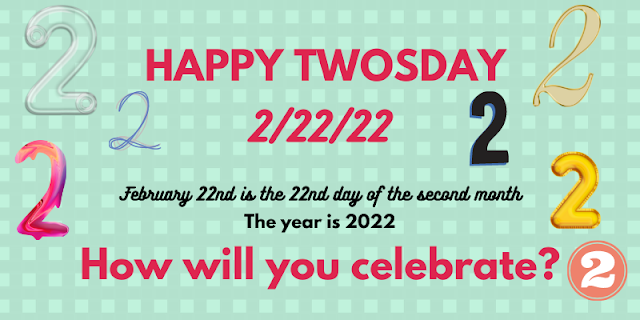
Curated Free Twos-Day Math Activities


TUESDAY READ ALOUDS

Tuesday by David Wiesner

Tuesday by Wiesner is mostly a  wordless book, a mystery, maybe an opportunity to connect to problem-solving.


Two of Everything Book by Lily Toy Hong

In this book, everything the main character puts in a magic pot doubles! This could be a fun book to correlate with input/output math tables!


One Grain of Rice by Demi

This book is about doubling and would go great with working on addition doubles or multiplying by 2, or exponential functions.


PUZZLES AND MORE

Mash-Up Math has SIX free activities for K - 8.


MATH = LOVE HAS A TWOS-day puzzle.


Don Steward puzzle with "halving."


Don Steward puzzle using both doubling and halving.


Cool Math Trick (the answer is always 2!)

BTW ... here's another version of a math trick that results in 2 every time ... why not ask students to create their OWN math trick that results in 2 every time!

The Answer Is 2

  • Think of a whole number 1 through 10 (We’ll use 6)
  • Double it (6×2=12)
  • Add 4 (12+4=16)
  • Divide by 2 (16÷2=8)
  • Subtract the original number (8-6=2)
  • The answer is always 2!

FOUR Twos - what values can you make using only 4 twos?


EXTRA Puzzles

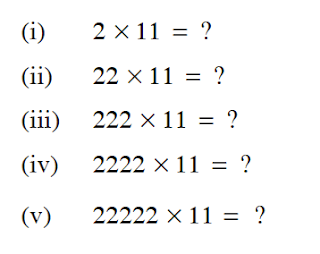
(1) Multiply the first three problems in the puzzle below. Can you determine the product for the last two using the pattern from your work?
(2) Calculate - 


What other ideas are there?  Please share in the comments!

Wednesday, June 2, 2021

Why I Don't Like IXL


I'm not in the classroom.  I'm retired.  Why would my opinion on IXL matter?  

I still work with students as a tutor.  Sometimes, my students ask me to help them with their IXL assignments.  There are three things I wish math teachers would consider before assigning IXL.

1) First, IXL promotes the lowest level math practice.  I understand why some teachers find this useful - you can choose very specifically the skill you want students to practice.  But IXL does not provide practice in critical or creative thinking or in problem solving, simply rote skills.

2) Second, IXL's scoring works against the student who struggles with basic facts.  If students make errors they lose more points than when they get problems correct.  The program punishes students for mistakes.  What does that say about the value of learning from our mistakes?  And since working out the problem is often not encouraged, all students have is the "one right answer" which eliminates again the importance of the process in the skills we teach.

Also related to the scoring algorithm, students spend an inordinate amount of time trying to achieve the cut off score set by their teacher, practicing the same mistakes over and over.  Instead of encouraging students, this is demoralizing and discouraging.  Our goal should be to increase students' interest in math, illustrating for them the beauty, the patterns, the connections between the concepts we teach.  How might we provide worthwhile practice that supports students?

3) Both parents and students report that the support that IXL does provide in math, the explanations are not helpful, not clear.  The last thing we need to promote is unclear instructions on how to perform basic arithmetic.

Bottom line, IXL is the opposite of what we know is empowering in math education.  Need more evidence?  Check out Common Sense Media Parent reviews - over 600 - with an average of 1 star.  There are also over 2000 student reviews on that site - averaging 1 star out of five.  

What can we do instead?  

Which one doesn't belong?

A)  Know your students and their home lives.  If they don't have support at home, don't assign homework on which they cannot be successful.  Assign a few (5 to 10) review problems instead.

B) Check for understanding in your lessons to make sure that students are ready for the homework you want to assign.  Don't assign homework over something that most of the class is not ready for.  Instead, build in regular review.

C) If students are ready for homework over the day's lesson, why not give 5 to 8 problems instead of 20 to 30?  Ask students to show their work.  If you are virtual use @Classkick, @PearDeck, or @Nearpod.  There are other tools as well - these are the ones with which I am most familiar.

D) As often as possible, differentiate homework. If students have already mastered the lesson, they don't need the same practice that students who have not achieved mastery yet.


Thursday, April 22, 2021

YouTube Channel worth exploring ...


Looking for challenge problems that address SAT, ACT, AMC and a whole host of other ABCs??

I like this Youtube Channel - I think you'll find interesting problems and complete solutions!  

How might you use this in class?  

1) What if you used it as a bonus for each unit? Or an extension for students who master the required content early? 

2) How about asking students if they can find a different way to solve - working on flexibility?

3) What about asking paired students to choose one problem (from your curated selection) to present to the class?  Build in cooperative skills, presentation skills, as well as working on math skills?

4) Only half of your class present due to a field trip or other event?  Don't want to teach "new" material?  Use one of these challenge problems!

How else might you use them?

Here's a sample:


Sunday, January 17, 2021

New to Lesson Planning?


I work with teachers working on certification processes online.  Just about every course, I meet teachers who for whatever reason never had instruction on how to write lesson plans.  I put together a few resources for them ... thought they might be helpful to someone finding this blog. 


RESOURCE 1: Scholastic often has good ideas for new teachers. This outline for lesson planning is one of those ... written especially with elementary teachers in mind.

The New Teacher's Guide to Creating Lesson Plans

Which of the ideas on this page is helpful to you?


RESOURCE 2: This guide doesn't suggest a one "right" way but instead suggests ways to think about lesson planning.

Teaching Guide: Writing lesson plans

Which section in this guide was most helpful to you?


RESOURCE 3: Many of us are having to design online learning experiences. Using the 5Es to develop online learning activities is a great way to organize learning.

Tips for Designing an Online Learning Experience Using the 5 Es Instructional Model

The author at this site has several videos to assist in understanding. Which video resonated with you?


RESOURCE 4: Maybe you have heard of "backwards planning" but are unsure how it is different from traditional planning. Check out this post: Backward Design: The Basics.

What is your typical lesson planning method??


RESOURCE 5: Last, but not least - This website has some great information about how to write "transformational" lessons!  Which idea might you incorporate in your own lesson planning?

Saturday, November 7, 2020

Writing in Math Class

In a conversation in a FB group about math, this list of writing topics was shared. Do you ask students to write in math class? Blog? Essay? Why or why not?

01] My Math Autobiography
02] When I Graduate, I Want To ...
03] Math in the Kitchen
04] A World Without Math (describe in detail)
05] Math and the Weather
06] Open Math Topic
07] My Favorite Thing (singular) About Math
08] What the Math Monster Might Say (draw a cartoon)
09] About My Q1 Project
10] Math and Sports
11] What Math Shape Am I? (choose shape, describe how you match its qualities)
12] Math and Smoking/Vaping
13] The Thing (singular) That Frustrates Me Most About Math...
14] Math and Vacations
15] Open Math Topic
16] Why is PEMDAS So Hard to Keep Straight?
17] Math Bumper Stickers (draw one funny, one thoughtful)
18] Dear Egbert, You Should Do Your Homework (to a friend)
19] Math of Buying/Owning a Car
20] About My Q2 Project
21] Are Boys or Girls Better At Math?
22] Open Math Topic
23] Math and Law Enforcement
24] I Want To Become Better at Math So That ....
25] Math and the Media
26] Math and Contagious Viruses
27] Why Are Word Problems Necessary?
28] Open Math Topic
29] My Math Day (encountered in a single day)
30] Math and Hospitality (restaurants, hotels, etc)
31] My Favorite Topic in This Course This Year
32] Dear BFF, Here's What to Expect in Mr./Mrs. --- Class Next Year.

Tuesday, August 25, 2020

Curated Ideas for Engaging Students from a Distance


MTBoS BLAUGUST

 Today I saw a slide show how to engage students in distance learning.  There are quite a few ideas curated from various blogs and such.  The presentation is not original with me.  I am sharing it with permission of the author.  The Facebook group where I saw it is a public group called Amazing Educational Resources. 

I hope that some of the ideas in the presentation are helpful to all of you working so hard to capture the hearts and minds of your students while delivering required content ... from a computer screen.  No easy feat for sure!

If you want to download the presentation, click here and make a copy.

Monday, August 24, 2020

Just for fun ... brain teasers


MTBoS BLAUGUST

Awesome Shelli asked early today if anyone has a slide show of brain teasers that could be used as an "away" screen on Google Meet.

Her ask resonated with me ... felt like a challenge that I wanted to tackle today.

So ... I pulled together a few brain teasers today that might be interesting to a wide range of students.

You are welcome to copy this slide show, use it, modify it, add to it!


The last slide has links to the resources from which I borrowed these teasers.  They are not original with me.  I don't have solutions for most of htem.