Reading and writing in math class helps to build, solidify, and deepen students' understanding of math concepts. In this post I share a few examples that I hope will spark your own ideas.
Writing frames support all math students in constructing short responses. These writing frames from science can be adapted to math. Here are 3 samples! These samples are simplistic but great for teaching the structure of writing short responses!
Here are some specific examples of algebra 2 topics:
Rational functions, What is the horizontal asymptote of this function? Show this on the graph. What does this value represent in terms of the problem posed? Considering the problem, why does your value for the horizontal asymptote make sense?
Exponential unit: You have a rich Uncle that gives you $5000 to invest. You have researched two different banks to see which you want to use to help you make the most money. Describe when it would be better to choose MK Federal Credit Union and when it would be better to choose MCB National.
Square root unit: Does doubling the length of the skid double the speed the driver was going? Justify your response using tables, symbols, and graphs.
Project idea: Read an article about mathematics or a mathematician in the New York Times (http://topics.nytimes.com/top/news/science/topics/mathematics/). Create a mini-poster that illustrates the article. Include a “3-Part Source Integration” writing. A “3-Part Source Integration” is a three-sentence statement that includes the text's title, author’s name, author information, source material that is either paraphrased or directly quoted, and a brief statement explaining the significance of the paraphrase or quotation.
Past examples of students' writing ... a blog post.
I find that these short writing opportunities provide windows into students' thinking. How do you use short writing prompts?
In the article "Advanced Math? Write!" the author stresses starting small. She emphasizes journal writing. I have not tried journal writing with 150 students. Even when I had considerably fewer students, I found keeping up with responses to journals challenging. How could I begin journaling with students without feeling overwhelmed?
Showing posts with label Math Munch. Show all posts
Showing posts with label Math Munch. Show all posts
Friday, December 2, 2022


Monday, June 9, 2014
Twitter convo --> #mathread --> #made4math!!
OK, so I didn't sleep well last night ... I think I was tweeting in my sleep!
There was this great conversation on Twitter last night. It started with a simple question about a particular math book and the need for higher algebra 1 achievement. It evolved into a discussion about bellringers, and the next thing we know we are talking about reading in math class. Here is a copy of our conversation!
Out of that conversation came this idea to collect articles, essays, stories, books even that we use in our classroom. Yes, reading activities in math! My #made4math contribution is the product of teamwork on Twitter ... thanks to @pamjwilson, @druinok, and @mathequalslove!
I find this whole discussion particularly interesting since one of the goals I wrote on my end of year evaluation was to use more reading passages in my Algebra 2 classes. We just began working with AVID strategies this past year and had a emphasis on writing. I used Math Munch for explorations in math and had students write short reflections in Edmodo. That worked well. Late in the year I asked them to read an essay on conics as a preview to our unit and tweet interesting ideas (#conicsfun) that they learned. That activity seemed to help them make connections between our work and real-world applications. (And of course, conics is an easy topic for connections!) It was at that point that I realized I needed more reading passages!
So here we are ... it's time for all math teachers to share! What reading passages, essays, news articles, stories, or books do you use in your classroom? Would you fill in the form? You'll have access to all the results! Our Form: #mathread!
Thank you!
There was this great conversation on Twitter last night. It started with a simple question about a particular math book and the need for higher algebra 1 achievement. It evolved into a discussion about bellringers, and the next thing we know we are talking about reading in math class. Here is a copy of our conversation!
Out of that conversation came this idea to collect articles, essays, stories, books even that we use in our classroom. Yes, reading activities in math! My #made4math contribution is the product of teamwork on Twitter ... thanks to @pamjwilson, @druinok, and @mathequalslove!
I find this whole discussion particularly interesting since one of the goals I wrote on my end of year evaluation was to use more reading passages in my Algebra 2 classes. We just began working with AVID strategies this past year and had a emphasis on writing. I used Math Munch for explorations in math and had students write short reflections in Edmodo. That worked well. Late in the year I asked them to read an essay on conics as a preview to our unit and tweet interesting ideas (#conicsfun) that they learned. That activity seemed to help them make connections between our work and real-world applications. (And of course, conics is an easy topic for connections!) It was at that point that I realized I needed more reading passages!
So here we are ... it's time for all math teachers to share! What reading passages, essays, news articles, stories, or books do you use in your classroom? Would you fill in the form? You'll have access to all the results! Our Form: #mathread!
Thank you!
Sunday, February 23, 2014
Mini-Project and Lesson Planning
This week I want to get back into my blogging routine.
I gave a unit test last Wednesday and Thursday on the attributes of exponential and logarithm functions. Friday and Monday are are given to the district benchmark test.
Then TUESDAY .... we just into solving exponential and logarithm functions. I am working on last minute plans for the unit!
So with the long testing sequence, I decided to assign a mini-project. I borrowed ideas from Fawn and from Sam to create a very similar mini-project assignment.
This is a very specific homework assignment ... requiring students to explore some math beyond our typical curriculum.
Already a few students have sent their work via email. A couple of them worked on a post from Math Munch and explored the app called Silk. Oh what fun! Because students talked about it, I had to go to Silk ... I created a flower and loved it!
Tuesday is coming fast ... I know I'm starting with Mathalicious, iPod dPreciation! From there ... hmmm ...
I gave a unit test last Wednesday and Thursday on the attributes of exponential and logarithm functions. Friday and Monday are are given to the district benchmark test.
Then TUESDAY .... we just into solving exponential and logarithm functions. I am working on last minute plans for the unit!
So with the long testing sequence, I decided to assign a mini-project. I borrowed ideas from Fawn and from Sam to create a very similar mini-project assignment.
This is a very specific homework assignment ... requiring students to explore some math beyond our typical curriculum.
Already a few students have sent their work via email. A couple of them worked on a post from Math Munch and explored the app called Silk. Oh what fun! Because students talked about it, I had to go to Silk ... I created a flower and loved it!
Tuesday is coming fast ... I know I'm starting with Mathalicious, iPod dPreciation! From there ... hmmm ...
Sunday, November 3, 2013
Students munching on math!
I am very excited about using Math Munch in my classroom as an enrichment activity. Today as I listened to the recording of the Global Math Autumn Special, Justin asked, "What are some goals you have for your students?" Well, one huge goal I have for my students is to learn that math is so much more than the work you typically find in a textbook. Math is beautiful and it permeates every area of our lives!
Unfortunately our curriculum is huge, and our school is very particular about sticking to the curriculum calendar. I decided that at least on test days, I would assign something that would open the eyes of my students to the world beyond in math. Math Munch provides the perfect avenue for that exploration.
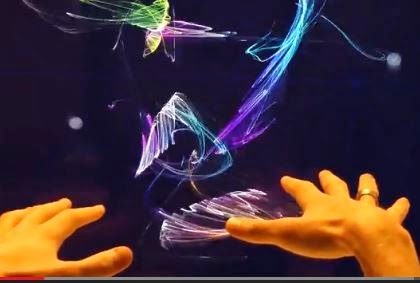 So this weekend, my students are exploring one of the latest posts on Math Munch, "Digital Art, Mastermind, and Pythagoras. And I am thoroughly enjoying their comments in Edmodo. Here are just a few snippets ...
AL writes "The video showing the orchestra and Nathan Selikoff was quite interesting. It reminded me a lot of my childhood with Disney Fantasia, where music is represented through a certain story. As I watched the video, I was surprised by how the Digital Art represents the music in different ways. When the Brass and Upper Strings were echoing each other, the screen would show blue swirls for the Brass and green and yellow for strings. You could also see that vibration of the notes were shown through dots moving fast and slow depending on the vibration of the sound made. I learned that it is possible to represent music in visual art."
HC writes "I chose to follow the link to the strategies for the online game Mastermind. I had absolutely no idea that there were so many strategies and solutions to the game. I tried to use the strategies to win the game, but the best I could do was solve the board in six tries. The strategies reminded me of the movie War Games, in which two kids accidentally lead the US to def-con 1 because they hacked onto a computer game. Computer codes can be used for all sorts of things, and I think that most people take them for granted. Without computer codes, we wouldn't have most of what we do have today such as cellphones, YouTube, Netflix, Facebook, Twitter, Google, etc. It is important to understand how these codes work, and know the basic skills needed to make them. It would be great if there was ever a class that taught you how to make computer codes, or equations much like the ones seen in the video, "Beautiful Chaos"."
EM writes "In the artwork "Beautiful Chaos", I was surprised to find out that the masterpiece was created with the graphs of different equations and functions. The artist didn't just scribble a pattern on the computer until it looked pretty, he created the craft geometrically and algebraically. What I wonder is what equations and functions did he use, what parent functions did he rely on the most, and where the x and y axis were placed."
ZJ writes " The link I decided to follow was the God's number link, simply because I didn't really understand what a God's number was. I discovered there were 43,252,003,274,489,856,000 different configurations of a Rubik's Cube! Surprisingly though, mathematicians found it could be solved in at most 20 moves, making 20 the Rubik's Cube's God's Number! Now I understand the concept of a God's number (knowing them would be really helpful when playing a specific game, huh?)."
PS writes " I was curious about how Selikoff was able to control the equations. Did he change the variables by the way he moved his hands, or did each quadrant he moved into have a pre-determined equation? I also wondered if the images would have been different if he had only used one hand instead of two."
HC writes, "I think it would be cool, if he created a 'Behind the Scenes' look at how he did it. Did anybody watch Vi Hart's video? I learned a lot of interesting information just by watching an 8- minute video. She has amazing math skills as well as doodling skills. I wonder what education she got, and how she got interested in Pythagoras."
CR writes "My question for Nathan Selikoff is about how he funds his projects. How does a mathematical artist make money? He must get funding somehow in order to create things like his cardboard marionette and his "Beautiful Chaos" piece."
DB writes " In the post, I encountered that math can become something beautiful and not just stressful and boring which surprised me. While watching Beautiful Chaos, I learned that it was so simple to do which surprised me. It also surprised me that Nathan Seilkoff can incorporate math and art together and as a product, create something so interesting."
Now ... if I can just find a way to extend these conversations so that students realize that they too can create beautiful math!
Thank you, Math Munch Team!
Unfortunately our curriculum is huge, and our school is very particular about sticking to the curriculum calendar. I decided that at least on test days, I would assign something that would open the eyes of my students to the world beyond in math. Math Munch provides the perfect avenue for that exploration.
AL writes "The video showing the orchestra and Nathan Selikoff was quite interesting. It reminded me a lot of my childhood with Disney Fantasia, where music is represented through a certain story. As I watched the video, I was surprised by how the Digital Art represents the music in different ways. When the Brass and Upper Strings were echoing each other, the screen would show blue swirls for the Brass and green and yellow for strings. You could also see that vibration of the notes were shown through dots moving fast and slow depending on the vibration of the sound made. I learned that it is possible to represent music in visual art."
HC writes "I chose to follow the link to the strategies for the online game Mastermind. I had absolutely no idea that there were so many strategies and solutions to the game. I tried to use the strategies to win the game, but the best I could do was solve the board in six tries. The strategies reminded me of the movie War Games, in which two kids accidentally lead the US to def-con 1 because they hacked onto a computer game. Computer codes can be used for all sorts of things, and I think that most people take them for granted. Without computer codes, we wouldn't have most of what we do have today such as cellphones, YouTube, Netflix, Facebook, Twitter, Google, etc. It is important to understand how these codes work, and know the basic skills needed to make them. It would be great if there was ever a class that taught you how to make computer codes, or equations much like the ones seen in the video, "Beautiful Chaos"."
EM writes "In the artwork "Beautiful Chaos", I was surprised to find out that the masterpiece was created with the graphs of different equations and functions. The artist didn't just scribble a pattern on the computer until it looked pretty, he created the craft geometrically and algebraically. What I wonder is what equations and functions did he use, what parent functions did he rely on the most, and where the x and y axis were placed."
ZJ writes " The link I decided to follow was the God's number link, simply because I didn't really understand what a God's number was. I discovered there were 43,252,003,274,489,856,000 different configurations of a Rubik's Cube! Surprisingly though, mathematicians found it could be solved in at most 20 moves, making 20 the Rubik's Cube's God's Number! Now I understand the concept of a God's number (knowing them would be really helpful when playing a specific game, huh?)."
PS writes " I was curious about how Selikoff was able to control the equations. Did he change the variables by the way he moved his hands, or did each quadrant he moved into have a pre-determined equation? I also wondered if the images would have been different if he had only used one hand instead of two."
HC writes, "I think it would be cool, if he created a 'Behind the Scenes' look at how he did it. Did anybody watch Vi Hart's video? I learned a lot of interesting information just by watching an 8- minute video. She has amazing math skills as well as doodling skills. I wonder what education she got, and how she got interested in Pythagoras."
CR writes "My question for Nathan Selikoff is about how he funds his projects. How does a mathematical artist make money? He must get funding somehow in order to create things like his cardboard marionette and his "Beautiful Chaos" piece."
DB writes " In the post, I encountered that math can become something beautiful and not just stressful and boring which surprised me. While watching Beautiful Chaos, I learned that it was so simple to do which surprised me. It also surprised me that Nathan Seilkoff can incorporate math and art together and as a product, create something so interesting."
Now ... if I can just find a way to extend these conversations so that students realize that they too can create beautiful math!
Thank you, Math Munch Team!
Wednesday, October 30, 2013
Getting ready to MUNCH!
It's been a busy week!
 Tomorrow my A Day students take their Absolute Value test. I am hoping for a great display of mastery. Our class averages on the last test were really quite good ... and I've challenged students to top those scores!
Typically homework on test days is an opportunity for an extension of some sort. I'm asking my students to read the latest post on Math Munch: Digital Art, Mastermind, and Pythagoras. The post is rich with art, games, and mathematics!
Here is the reflection sheet I've assigned them. I look forward to reading their posts on Edmodo as they converse with their classmates about their munching experience!
Tomorrow my A Day students take their Absolute Value test. I am hoping for a great display of mastery. Our class averages on the last test were really quite good ... and I've challenged students to top those scores!Typically homework on test days is an opportunity for an extension of some sort. I'm asking my students to read the latest post on Math Munch: Digital Art, Mastermind, and Pythagoras. The post is rich with art, games, and mathematics!
Here is the reflection sheet I've assigned them. I look forward to reading their posts on Edmodo as they converse with their classmates about their munching experience!
Tuesday, October 22, 2013
Reflection and a New Task!
The other day, @druinok posted a reflective piece about her goals for the year and assessed her progress so far this year. That post resonated with me. I have a tendency to set goals and then life happens, the goals get lost in the shuffle. It's almost like goal-setting is the goal ... and of course, it's not! So, I'm copying @druinok's idea ... and taking a moment for reflection.
 At the end of last year we had to reflect on our work for our supervising administrator. At that time I wrote these goals:
 I have not read the book, Mathematics Formative Assessment. In fact, I decided to purchase it this morning as I am reviewing these goals. I did read Embedded Formative Assessment this summer. I am using Edmodo quizzes to keep up with formative assessment. Some of the time I think those assessments are valid and useful. I need more work in this area but I am "making progress" in formative assessment (translating that to a C).
The note-taking process is not where it should be. I'm definitely in the "emerging" category here. I did switch to binders this year which I love much better than notebooks. The handouts are all hole-punched ... each unit is color coded. So in that respect, I've made some progress. I have demonstrated Cornell Notes a time or two ... but I'm not consistent!
I love using My Favorite NO ... and the students like it too. I don't use it often enough or with enough regularity so I would categorize this effort to review student mistakes as "emerging." In this reflective process, I am realizing that I need a checklist in my planning process. I think we a checklist, I would be sure to include more of the "best practices"!! That's my next task!
I am using "I notice, I wonder" fairly regularly in class. For this I would say I'm "making progress." I've also just begun to use Math Munch to promote curiosity and students seemed to like the site. Now I need to figure out how often I can cycle back to the site! That's going on my planning checklist. I'm also using Estimation 180 which promote curious thinking as well.
Last ... I am talking less. I might give myself a "B" on this ... in the satisfactory range. I am planning lessons with more student discovery, group discussion, student practice.
This process has been helpful and the planning checklist will make an excellent addition to keep me more focused! I'll share it when I get it done!
How about you? How are you coming along on the goals you set for this year?

- I want to create unit organizers so that my students see how lessons tie together.
- I plan to read Mathematics Formative Assessment: 75 Practical Strategies for Linking Assessment, Instruction, and Learning to continue learning more ideas for formative assessment.
- I want to do a better job with teaching students how to take notes.
- I want to do more with error analysis to increase students' critical thinking.
Then at the beginning of this year, I wrote a post for MSSunFun on goals that included these three goals:
- I want to talk less.
- I want to develop and promote student creativity.
- I want to do more with student mistakes.
Hmmm ... that's a lot of goals!
So ... I created unit organizers for the first 3 units and today I realize that I did not create one for the unit we began this week. The unit organizers leave much to be desired. They are not constructed in the manner I envisioned last year. So far on this goal I am "emerging" ... I hate to write that I'm failing!
The note-taking process is not where it should be. I'm definitely in the "emerging" category here. I did switch to binders this year which I love much better than notebooks. The handouts are all hole-punched ... each unit is color coded. So in that respect, I've made some progress. I have demonstrated Cornell Notes a time or two ... but I'm not consistent!
I love using My Favorite NO ... and the students like it too. I don't use it often enough or with enough regularity so I would categorize this effort to review student mistakes as "emerging." In this reflective process, I am realizing that I need a checklist in my planning process. I think we a checklist, I would be sure to include more of the "best practices"!! That's my next task!
I am using "I notice, I wonder" fairly regularly in class. For this I would say I'm "making progress." I've also just begun to use Math Munch to promote curiosity and students seemed to like the site. Now I need to figure out how often I can cycle back to the site! That's going on my planning checklist. I'm also using Estimation 180 which promote curious thinking as well.
Last ... I am talking less. I might give myself a "B" on this ... in the satisfactory range. I am planning lessons with more student discovery, group discussion, student practice.
This process has been helpful and the planning checklist will make an excellent addition to keep me more focused! I'll share it when I get it done!
How about you? How are you coming along on the goals you set for this year?
Tuesday, October 15, 2013
Math Munching today!

The school-wide goal on writing is significant. In addition to that goal, I want students to experience math beyond our typical curriculum. I want students to talk about math with classmates. Using Edmodo allows students to use their social media skills.

This is only our first attempt. Here are a few responses I noticed today ...
EH said, "I found tsoro yematatu to be very interesting in the sense that it is essentially a more complex version of tic-tac-toe. While I have never played it, I did play Nine Men's Morris last year, which is very similar. Also, the Pass 'em On GIF caught my attention right away. Originally, I thought that if you followed one red dot, it would eventually make its way to the bottom of the screen. However, after studying it closely, I was able to determine that the dots rotate in a triangle-like formation. Therefore, a red dot at the top of the screen could never make it near the bottom of the screen."
AM reflected,"I found the Klein groups very fascinating, i had a hard time wrapping my mind around the fact that the Klein bottle was only one sided. I have heard of the Klein bottle prior to reading this blog. The kleinian groups remind me of fractal art."
BC wrote, "While playing Tsoro Yematatu I found that most of the time there are only 0-2 possible moves to make. From the time all the tiles are on the board everything that happens seems pretty forced. This leads me to believe that most of the strategy is in the original placement of the tiles, not so much in how you move them. I found it interesting that a game of movement was more a game of placement." A classmate wrote back, "That is very cool discovery B-, I didn't even think to play the game and study the strategy. That shows very good perception/math skills."
EH said, "I found tsoro yematatu to be very interesting in the sense that it is essentially a more complex version of tic-tac-toe. While I have never played it, I did play Nine Men's Morris last year, which is very similar. Also, the Pass 'em On GIF caught my attention right away. Originally, I thought that if you followed one red dot, it would eventually make its way to the bottom of the screen. However, after studying it closely, I was able to determine that the dots rotate in a triangle-like formation. Therefore, a red dot at the top of the screen could never make it near the bottom of the screen."
AM reflected,"I found the Klein groups very fascinating, i had a hard time wrapping my mind around the fact that the Klein bottle was only one sided. I have heard of the Klein bottle prior to reading this blog. The kleinian groups remind me of fractal art."
BC wrote, "While playing Tsoro Yematatu I found that most of the time there are only 0-2 possible moves to make. From the time all the tiles are on the board everything that happens seems pretty forced. This leads me to believe that most of the strategy is in the original placement of the tiles, not so much in how you move them. I found it interesting that a game of movement was more a game of placement." A classmate wrote back, "That is very cool discovery B-, I didn't even think to play the game and study the strategy. That shows very good perception/math skills."
EO posted, "In the post from last Thursday, I found it interesting how enjoyable geometry becomes when you apply to something you like. When you compare math to games like Pass 'Em On, you tend to wonder how games like that work and you begin to enjoy yourself. It's also interesting to understand the history of math and how it can originate in places as far away as Zimbabwe. Math can be found in all subjects, even history. I found this website very simple and interesting and I think math can be more enjoyable when you compare it to other aspects of learning."
There are many more posts ... these are just a few. I am responding to as many as I can. I'll repeat the lesson tomorrow with my B-Day students. I'm hoping to build in a regular "chat" around Math Munch postings and eventually have students write more extensively about a topic of interest.
Saturday, October 5, 2013
Upcoming Problem Solving
I love problem solving ... I wish we had more time for exploring nonroutine problems in our Algebra 2 course. Our district has a tight curriculum schedule - filled with specific skills. We meet for 90 minutes every other day which means we teach several skills in a lesson. I'm always on the look-out for a problem that ties those skills together!

Resources for Problem Solving:
MTBoS for sure!
Summer Makeover Math Series
Math Projects
Mathematics Assessment Project
A past post on problem solving
This year we have had time for short explorations. We chased the Tortoise, Hare, and Rat in a race. We munched on Oreos while we found the calories in the wafer and the stuffing.
In the coming two weeks I am planning two problem solving days.
On Tuesday/Wednesday of the coming week, students will take a
 ride at the Mild and Wild Amusement Park. We are in the middle of our Matrices unit. I am looking forward to the conversations around our room!
Then on October 15, we will join Detective Curlock Foams in finding the culprit in a mystery of the missing laundry!
I look forward to writing about these adventures! We will be using our group whiteboards that were funded through Donors Choose! I need to create a rubric for problem solving. I know when students work in groups that most will be engaged and thoughtful about the work. There will also be a few students who are dependent on their classmates and choose to check out of the work.
How do you ensure that all students are working, thinking, communicating math when doing group problem solving??
How do you ensure that all students are working, thinking, communicating math when doing group problem solving??
Beth
Resources for Problem Solving:
MTBoS for sure!
Summer Makeover Math Series
Math Projects
Mathematics Assessment Project
A past post on problem solving
Saturday, September 21, 2013
Favorite Resources

I'm not sure I know where to start ...
The past two weeks I've posted about some favorite techie type resources ...
I use my PHONE everyday! What did we do without them! I take pictures, I use CamScanner to create pdfs to post online.
I've just started using Edmodo. Our administration introduced Edmodo last spring but I was too overwhelmed then to start anything new. This year, I am finding out what a bonus it can be. I love giving my quizzes online. Obviously it means I take home less papers to grade. BUT it benefits the students ... they get instant feedback and they can easily review the questions when they need to. We have a writing across disciplines initiative this year. I plan for students to write reflections, thoughts in Edmodo. I am hoping that will be more appealing to them than writing "papers" in math ... and it gives us all the opportunity to respond to one another's ideas. Math Munch will be my go to site for reflection and discussion!
I've had several parents thank me for creating YouTube videos this year. They are nothing special ... and I need to get better at them. I use my document camera, laptop, and Movie Maker to capture the work on a single problem (sometimes 2). I use the videos to multiply my tutoring power. I can only stay after school so many hours, and I want students to have help when they need it. So the short (3 - 5 minutes) explanations of homework problems or extensions from our classwork have the potential to be powerful in student learning. My parents/students are saying this is a favorite resource!
I use my list of Super Sites in lesson planning ... checking each of those sites to see how I can transform "plain" lessons into engaging opportunities for thinking, discussing and learning. I'm adding Mathagogy to the list ... Julie blogs about a lesson that sounds awesome! I look forward to watching the 2 minute videos!
And of course, I visit the MTBoS blogs, making note of questioning strategies, projects, foldables, and more ... amazingly great ideas! I use Feedly and Bloglovin to keep track of the blogs I read, marking them when I need to save ideas.
A new resource I've bookmarked is YouCubed. Jo Boaler is putting together the site with information she shared in the course How to Learn Math this summer. I know how easy it is to participate in excellent professional development only to get caught up in the hectic daily work ... and let the good ideas slip away.
There are so many resources, that I sometimes find myself lost in the reading and learning ... the noticing and wondering ... and when I look up ... way too much time has elapsed!
Thursday, September 19, 2013
My new Fave ... Edmodo!
 I used Edmodo for the first time this week to give a quiz.
 It's a win-win situation.
- Students receive instant feedback.
- They can review the quiz questions they missed - right then or later.
- The program randomizes the questions and answers in case you have wandering eyes in your classroom.
- The program provides me with graphs of how well students did on each question so I know which ones I might need to spiral back in our conversations.
- I can easily create a 'retake' quiz because when you ask to edit a previously created quiz, the program automatically opens a copy for you. That copy can be renamed, questions tweaked ... and the retake is ready to go.
- I don't take home 150 papers daily ... fight to grade them all ... so I can return them in a timely manner!
Formative assessment just got easier by a long shot! I can give a quick check, look at the scores, determine who needs help, create small teaching groups or set up tutoring sessions.
I like to take baby steps when using new platforms. After we have taken a couple of quizzes and we have that process under control, I want to use the front page ... "notes" very much like the "status" page on Facebook, for class discussion. I plan to use the Math Munch site as our source of discussion topics. Hopefully I can report on that in a week or two!
Friday, August 2, 2013
How to Learn Math #5: Number Sense!

I worked on Session 5 of How to Learn Math yesterday. This course both affirms my knowledge and practice ... AND it challenges me to grow and learn! I have long believed that building number sense is huge and that we don't do enough of it in schools. I have been tutoring young students this summer - students going into grades 2, 3, and 5. These students in particular needed help with composing and decomposing numbers and in using "friendly" numbers to assist in problem solving.
As I thought about number sense I was remembered that I posted about that topic several months ago. I am repeating the post below because it has some useful links in it!
~~
Usually when I think of building number sense, I think about primary math education. I know, though, number sense is something we all must work on all the time! So I did some Internet research to find resources and ideas for middle and high school.
- Knowing how precisely a high school freshman can estimate the number of objects in a group gives you a good idea how well he has done in math as far back as kindergarten, researchers at The Johns Hopkins University found. This Science Daily article is quite interesting.
- One of my first "hits" in my search revealed this book, Building Powerful Numeracy for Middle and High School Students written by Harris, published by Heinemann. The Heinemann website has a brief description. I plan to put this book on my summer reading list!
- If you are looking for number sense strategies and tricks, this website looks awesome!
- The state of Texas has a well-developed academic competition developed by the University of Texas - one of which is number sense. Practice tests are available online here.
- NCTM has published several number sense tasks - with explanation in their Reasoning and Sense Making Task Library
- The state of Washington has posted sample number sense writing prompts for all grade levels.
- San Diego school system has posted ideas for number sense routines.
- University of California also published a workbook on number sense.
- Minnesota has published an interesting paper showing the progession of number sense through primary years to high school.


I'm working on a plan for warm-ups ... for when students first enter. I know I want to incorporate number sense activities, as well as problem solving and review of the daily curriculum topics. Once a week I want to use Math Munch in some way. There are so many ways to go ... so much to do ... How do you structure those first 5 - 10 minutes of your class?
I look forward to hearing about what others do to build number sense!
Monday, June 10, 2013
Blogosphere ... Good Ideas!
As I was working on my Feedly list, I visited a number of blogs today. I am really bad about remembering good ideas that I see around the blogosphere. So I was delighted when I happened up the radical rational ... where she mentions reading three blogs a day. She blogged about the three great ideas that she found today ... which sent me on my own hunt for three ideas to use next year!
One of my goals for next year is to do more with math vocabulary. So I was delighted to find this simple self-reflection on vocabulary at Math = Love! I remember reading about this strategy in Marzano's book on vocabulary but I didn't put it into practice this past year. Creating a master list for each unit, rating before, in the middle and at the end of the unit will be helpful in getting students to think about their own understanding of math terms. (And ... Sarah mentioned a book I might need to add to my summer reading list ... Styles and Strategies for Teaching High School Mathematics: 21 Techniques for Differentiating Instruction and Assessment!
I was not satisfied with my math notebooking efforts this past year. I value keeping a well-organized notebook but doing so is not one of my skills! I am afraid that I passed on my lack of organization to my students this past year. So I was glad to run across Borsht with Anna's post on math notebooking in a 3-ring binder! Our print shop will copy assignments on hole punched paper. Hole punching is so much easier than gluing and pasting! I'm hoping that with this plan in place I can teach myself and my ninth graders how to keep each unit organized!
Last but not least, I visited Math Munch today. Wow! So many possibilities! I love the numeric design project. I had some doodlers this year that would have loved to created graphic design numbers for me! The Math Munch folks highlighted a TED video presented by Nina Fetterman on epidemics. I can imagine using this video (or a clip of it) as I introduce exponential numbers - talking about the spread of disease! An ongoing effort is capturing students' attention and interest. I'm thinking there will be ways to use Math Munch next year ... maybe even "math munch Mondays!"
As you peruse the Internet this summer, how are you organizing the good ideas you find? Please share!

One of my goals for next year is to do more with math vocabulary. So I was delighted to find this simple self-reflection on vocabulary at Math = Love! I remember reading about this strategy in Marzano's book on vocabulary but I didn't put it into practice this past year. Creating a master list for each unit, rating before, in the middle and at the end of the unit will be helpful in getting students to think about their own understanding of math terms. (And ... Sarah mentioned a book I might need to add to my summer reading list ... Styles and Strategies for Teaching High School Mathematics: 21 Techniques for Differentiating Instruction and Assessment!
I was not satisfied with my math notebooking efforts this past year. I value keeping a well-organized notebook but doing so is not one of my skills! I am afraid that I passed on my lack of organization to my students this past year. So I was glad to run across Borsht with Anna's post on math notebooking in a 3-ring binder! Our print shop will copy assignments on hole punched paper. Hole punching is so much easier than gluing and pasting! I'm hoping that with this plan in place I can teach myself and my ninth graders how to keep each unit organized!
Last but not least, I visited Math Munch today. Wow! So many possibilities! I love the numeric design project. I had some doodlers this year that would have loved to created graphic design numbers for me! The Math Munch folks highlighted a TED video presented by Nina Fetterman on epidemics. I can imagine using this video (or a clip of it) as I introduce exponential numbers - talking about the spread of disease! An ongoing effort is capturing students' attention and interest. I'm thinking there will be ways to use Math Munch next year ... maybe even "math munch Mondays!"
As you peruse the Internet this summer, how are you organizing the good ideas you find? Please share!
Subscribe to:
Posts (Atom)