Showing posts with label Global Math. Show all posts

Sunday, November 3, 2013

Mission 4: Global Math Autumn Special!

In the whirlwind of Explore MTBoS, Mission 4 was all about listening and learning.  I have to confess, I am not an auditory learner.  I find it difficult to stay engaged in a webcast.  I start out well, and before long I'm multi-tasking and missing key points.

BUT today, I listened to all of the recording of the Global Math Autumn Special!!!  Yes, I graded papers while listening, and so I may have missed a few thoughts, but today I stayed the course.

Thoughts I want to pursue a bit more include these:

I read Wiliam's book on formative assessment and I use "hinge questions" but I need to get better at them.  I just graded tests.  The class averages range from 81 to 88 - that's not bad.  But the range of the grades was huge.  The low grades are really low!  I wonder if I could have done a better job during the unit catching the misunderstandings!

I was intrigued by Chris' newsletter presentation - signed up to get my copy. I was inspired by the back copies he sent (speedy response!!). I send a weekly email to my parents just letting them know what we accomplished the previous week and what our focus will be in the coming week. It's newsy, informal, and my parents love it! But I could include a challenge for families to work on together ... and until I figure out my own challenges, I will borrow from Chris' newsletter. I loved the puzzles and quotes!

The seating chart that was described was very fascinating.  I use my classroom data but not anywhere near as elaborate as that.  I'm wondering if there is a way to adapt the seating chart idea to fit our work in our school??  Right now, students sit where they choose so I'm not sure that assigning them seats at this stage will work.  

Hedge reminded me to be careful in sharing my own math biases.  I was one of those who did not enjoy statistics in college.  But that is not something I should share with students.  Instead, it would be much better to get students excited about the power of statistics!  I may have to listen to Hedge's presentation again so that I can note all the ways she collects data!

One of the statements made ... I apologize that I did not record who said it ... sticks with me tonight: "The way we share math with kids matters!"

I have quite a bit to think about.  Thanks to Global Math and the MTBoS for encouragement, inspiration, and great ideas!


Students munching on math!

I am very excited about using Math Munch in my classroom as an enrichment activity.  Today as I listened to the recording of the Global Math Autumn Special, Justin asked, "What are some goals you have for your students?"  Well, one huge goal I have for my students is to learn that math is so much more than the work you typically find in a textbook.  Math is beautiful and it permeates every area of our lives!

Unfortunately our curriculum is huge, and our school is very particular about sticking to the curriculum calendar.  I decided that at least on test days, I would assign something that would open the eyes of my students to the world beyond in math.  Math Munch provides the perfect avenue for that exploration.

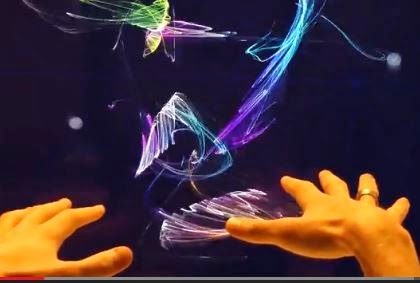
So this weekend, my students are exploring one of the latest posts on Math Munch, "Digital Art, Mastermind, and Pythagoras.  And I am thoroughly enjoying their comments in Edmodo.  Here are just a few snippets ...

AL writes "The video showing the orchestra and Nathan Selikoff was quite interesting. It reminded me a lot of my childhood with Disney Fantasia, where music is represented through a certain story. As I watched the video, I was surprised by how the Digital Art represents the music in different ways. When the Brass and Upper Strings were echoing each other, the screen would show blue swirls for the Brass and green and yellow for strings. You could also see that vibration of the notes were shown through dots moving fast and slow depending on the vibration of the sound made. I learned that it is possible to represent music in visual art."

HC writes "I chose to follow the link to the strategies for the online game Mastermind. I had absolutely no idea that there were so many strategies and solutions to the game. I tried to use the strategies to win the game, but the best I could do was solve the board in six tries. The strategies reminded me of the movie War Games, in which two kids accidentally lead the US to def-con 1 because they hacked onto a computer game. Computer codes can be used for all sorts of things, and I think that most people take them for granted. Without computer codes, we wouldn't have most of what we do have today such as cellphones, YouTube, Netflix, Facebook, Twitter, Google, etc. It is important to understand how these codes work, and know the basic skills needed to make them. It would be great if there was ever a class that taught you how to make computer codes, or equations much like the ones seen in the video, "Beautiful Chaos"."

EM writes "In the artwork "Beautiful Chaos", I was surprised to find out that the masterpiece was created with the graphs of different equations and functions. The artist didn't just scribble a pattern on the computer until it looked pretty, he created the craft geometrically and algebraically. What I wonder is what equations and functions did he use, what parent functions did he rely on the most, and where the x and y axis were placed."

ZJ writes " The link I decided to follow was the God's number link, simply because I didn't really understand what a God's number was. I discovered there were 43,252,003,274,489,856,000 different configurations of a Rubik's Cube! Surprisingly though, mathematicians found it could be solved in at most 20 moves, making 20 the Rubik's Cube's God's Number! Now I understand the concept of a God's number (knowing them would be really helpful when playing a specific game, huh?)."

PS writes " I was curious about how Selikoff was able to control the equations. Did he change the variables by the way he moved his hands, or did each quadrant he moved into have a pre-determined equation? I also wondered if the images would have been different if he had only used one hand instead of two."

HC writes, "I think it would be cool, if he created a 'Behind the Scenes' look at how he did it. Did anybody watch Vi Hart's video? I learned a lot of interesting information just by watching an 8- minute video. She has amazing math skills as well as doodling skills. I wonder what education she got, and how she got interested in Pythagoras."

CR writes "My question for Nathan Selikoff is about how he funds his projects. How does a mathematical artist make money? He must get funding somehow in order to create things like his cardboard marionette and his "Beautiful Chaos" piece."

DB writes " In the post, I encountered that math can become something beautiful and not just stressful and boring which surprised me. While watching Beautiful Chaos, I learned that it was so simple to do which surprised me. It also surprised me that Nathan Seilkoff can incorporate math and art together and as a product, create something so interesting."

Now ... if I can just find a way to extend these conversations so that students realize that they too can create beautiful math!

Thank you, Math Munch Team!

Wednesday, January 16, 2013

Math Games

Last night I listened in to the Global Math conference on games for the classroom.  I was intrigued and admittedly a bit intimidated.  Games are not my forte ... especially not online games.  I realize in this area I am behind the times!  I am a digital immigrant ... and doing fairly well with various productivity tools.  But I haven't spent much time with gaming.  Last night someone mentioned the Factor Game ... I have played that but had forgotten about it.  In going to the site today, I see that Illuminations has added a number of games at their Calculation Nation site.  Since all of our students are being issued laptops this week, I'm thinking about giving students the opportunity to earn a little extra credit if they will play these games and write a review of them for me.  

I am exploring Manga High as another option for online game playing.  I'm not familiar with the games there enough to comment on them yet.  But I am hoping they can serve as a tool for review of basic algebra skills. 


I am familiar with a few math games that are not computerized like Set and Equate.   I used to play Set with students often.  (The students I worked with didn't enjoy the Equate game!)  I am in a different environment now and there is so little down time so I haven't explored Set with my current students.  In reviewing the game today, I discovered there is a daily Set puzzle online ... might have to strain my brain a bit with this!

An interesting coincident today ... checked my email for my daily news from NCTM ... and yes, there is an article about games!  (Do you subscribe to the NCTM Smartbrief news service??  I highly recommend it).  The article today is about Girls and Games: What's the Attraction!

“When we asked them about springs and levers, they had no understanding of why they were important in the real world,” Van Voorhis said. “But when we were able to situate those kinds of tools in a real-world context, where they were solving a problem that was directed towards social good, we saw the engagement numbers pop.”  girls were talking about physics or game play 76 percent of the time and were only off topic 5 percent of the time."


Embedded in the article about girls and games is a link from April 2012 entitled, What’s the Secret Sauce to a Great Educational Game?  The article highlights the game, Zombie Division.  Their research is summarized in this sentence, "The results were clear: The children who had played the intrinsically-rewarding game learned more math."

It's time for me to catch up!  Looks like there is some gaming in my future!