Showing posts with label student reflection. Show all posts

Tuesday, September 18, 2018

Reflecting on Habit 7 Summarize, Determine Importance, Synthesize

The authors of Teaching Numeracy: 9 Critical Habits to Ignite Mathematical Thinking begin the chapter on Habit 7 with this sentence, "Determining importance, summarizing, and synthesizing are related acts that together comprise one of the most crucial of the nine critical thinking habits."

In the chapter they talk about note-taking and journaling. This past year I encouraged students to use the Cornell Note System.  I created the structure for them; and for some students that worked well. Others struggled with notes.  They were good about class discussion, working out examples, but taking notes seemed to be a challenge.  I've been thinking about how to improve note-taking in the coming year.


I especially want to take more time with summarizing the lesson.  I know how important it is in my own learning to stop and reflect for a moment on what I've learned and how it connects to previous thoughts.  Stop and jot is a tool - helpful for summarizing learning as is One Minute Write.  Another tool is creating study cards.  I did not use this at all last year, but in the last few months I have seen examples of sketch noting that would make awesome study cards. And study cards would be good tools for interleaving practice.

My take-away from this habit is that I need to allow more time for reflection.  Summarizing can't happen well if we are frantically working right up until the bell rings.  My goal ... set my internal teaching clock to allow reflection in the last five minutes!

An aside about journaling ... it's a great tool as well.  My students blog but I don't require a particular topic.  So some students use their blog to synthesize learning.  Others use it to curate interesting ideas they are researching in math.  I want to continue student blogs in the coming year and I'm trying to decide what purpose is best.

Thursday, May 19, 2016

End of Year Survey #MTBoS30 - 19

I published my teacher survey today.  Only about a third of my students have responded, so it is too early to share the results.

I used Google Form because it is easy, and the charts are great for this type of data.

Here is a copy of my form ... feel free to make a copy, modify it, use it if you want.


Saturday, February 13, 2016

They created their own Quizizz!

We are wrapping up our unit on Rational Functions.

First we studied their graphs!
We learned about asymptotes (ditches) and removable discontinuities (holes).
Students able to analyze the key attributes of rational functions.

Then we jumped into the simplifying and solving.
We learned how to find common denominators.
We learned how to apply rational functions to a variety of word problems involving rate ... travel rate, distance rate, cost per person, mixture rate.


Instead of my creating a game for students to review, I asked students to create their own Quizizz game.  They created accounts, developed 10 problems, determined thoughtful multiple choice answers, and uploaded those.

They came to class armed with their Quizizz links!  I grouped desks together, and invite them to share their games.  They played for 40 - 50 minutes.  They swapped codes, advertised their codes on the board.  The conversations were lively.  They checked each other's work; complained when they found errors; got excited when they scored well on games.


After playing I asked students about their confidence level on the math skills.  I also asked them if they enjoyed creating their own games.


Their test is Tuesday.  I'm concerned about their confidence levels.  I've provided review documents, videos, and will provide a study prep session before school.  I realize that the data showing is just a few students - but the average is only about 3 out of 5.

Students reported not enjoying putting the Quizizz test together.  They said it was a lot of work.  It's the last week of the marking period and students were feeling the pressure from many courses.  Timing wasn't great.  If I ask students to create a game again, we will definitely work in teams on the assignment.  We might also develop a problem or two after each lesson so students aren't having to create a game from scratch at the end of a unit.

As I work Tuesday's test this weekend, I know we have prepared well.  In my mind this is the more difficult of the units we study; the more abstract; the more challenging.  

Somehow I want to help students with their confidence levels.  How do you do that in your classroom?


Friday, August 21, 2015

#MTBoSBlaugust 21: Setting up ABOUT in Google Classroom!

Last night I worked on three Google Forms that will be standard tools posted in the "About" Stream in Google Classroom.


At the top of the list is the "Start Here: Daily Warm-UP" Form.  The form asks basic information, name, ID, email address and then has 5 blank questions.  The actual questions will be projected in the classroom each day.  This generic form will be used everyday - no matter what questions I project.  This way I have all of a student's participation in warm-ups in one spreadsheet.

The next form is a unit reflection to be completed after each unit test.  I am excited about this one because it will help students and me to capture study habits all throughout the year.  Instead of waiting until the end of the year for feedback, students can give feedback on this form.


That's difficult to read ... here is a pdf of the questions I asked.

The last entry on the "About" page is a self-reflection, self-graded rubric for blog posts.  Students blog twice a six weeks.  They will evaluate one blog post each six weeks based on a rubric and enter their scores in the Google Form.

These three forms will be standard tools, one used daily, one used 2 - 3 times a six weeks, and one used once per six weeks.


Thursday, July 17, 2014

#70Days It's a GRIT Day


I was on the plane for a couple of hours yesterday - just enough time to read Fostering Grit: How do I prepare my students for the real world? by Thomas H. Hoerr.  I highly recommend the book - it's a short read, the information is good, and it is practical!

This book ties in very well with our discussion a week ago on growth mindset ... and in fact some of the ideas I mentioned in this post are expanded here.

Here are a few of my favorite ideas:

Grit has to be taught. In the post on mindset I mentioned a Word Splash and asking students to categorize the words. I envision those words being on a bulletin board. Hoerr suggests these terms: grit, failure, frustration, tenacity, perseverance, resilience, self-confidence, self-image, comfort zone ... throw in a few more: ability, attitude, challenge, effort, fixed mindset, growth mindset.

I mentioned one picture book in the previous post ... here are two more (I love picture books even in high school!).  Giraffes Can't Dance by Giles Andreae, Guy Parker-Rees is about a giraffe who is teased because he can't dance ... until the day he hears the "right" music.  It's a quick read and could be used to make the point that everyone's contribution in class is worthwhile - no put-downs!

The other book is Mirette on the High Wire by Emily Arnold McCully.  This book is new to me, but it is about overcoming anxiety and mastering the tightrope - fits perfect with growth mindset!

I definitely want to use this chart with students ... really into self-reflection!


This fits in well with the Red, Yellow, Green stickers I wrote about recently as well!

Last ... tell parents and students when a GRIT day is coming up!  What a great way to engage parents in the conversation.  I look forward to sharing the idea of GRIT with parents in my weekly emails!

Sunday, November 3, 2013

Students munching on math!

I am very excited about using Math Munch in my classroom as an enrichment activity.  Today as I listened to the recording of the Global Math Autumn Special, Justin asked, "What are some goals you have for your students?"  Well, one huge goal I have for my students is to learn that math is so much more than the work you typically find in a textbook.  Math is beautiful and it permeates every area of our lives!

Unfortunately our curriculum is huge, and our school is very particular about sticking to the curriculum calendar.  I decided that at least on test days, I would assign something that would open the eyes of my students to the world beyond in math.  Math Munch provides the perfect avenue for that exploration.

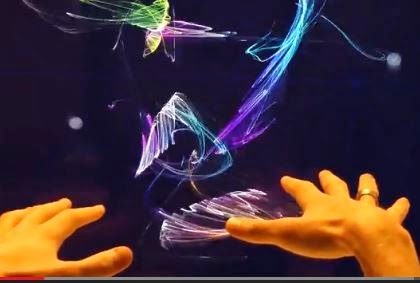
So this weekend, my students are exploring one of the latest posts on Math Munch, "Digital Art, Mastermind, and Pythagoras.  And I am thoroughly enjoying their comments in Edmodo.  Here are just a few snippets ...

AL writes "The video showing the orchestra and Nathan Selikoff was quite interesting. It reminded me a lot of my childhood with Disney Fantasia, where music is represented through a certain story. As I watched the video, I was surprised by how the Digital Art represents the music in different ways. When the Brass and Upper Strings were echoing each other, the screen would show blue swirls for the Brass and green and yellow for strings. You could also see that vibration of the notes were shown through dots moving fast and slow depending on the vibration of the sound made. I learned that it is possible to represent music in visual art."

HC writes "I chose to follow the link to the strategies for the online game Mastermind. I had absolutely no idea that there were so many strategies and solutions to the game. I tried to use the strategies to win the game, but the best I could do was solve the board in six tries. The strategies reminded me of the movie War Games, in which two kids accidentally lead the US to def-con 1 because they hacked onto a computer game. Computer codes can be used for all sorts of things, and I think that most people take them for granted. Without computer codes, we wouldn't have most of what we do have today such as cellphones, YouTube, Netflix, Facebook, Twitter, Google, etc. It is important to understand how these codes work, and know the basic skills needed to make them. It would be great if there was ever a class that taught you how to make computer codes, or equations much like the ones seen in the video, "Beautiful Chaos"."

EM writes "In the artwork "Beautiful Chaos", I was surprised to find out that the masterpiece was created with the graphs of different equations and functions. The artist didn't just scribble a pattern on the computer until it looked pretty, he created the craft geometrically and algebraically. What I wonder is what equations and functions did he use, what parent functions did he rely on the most, and where the x and y axis were placed."

ZJ writes " The link I decided to follow was the God's number link, simply because I didn't really understand what a God's number was. I discovered there were 43,252,003,274,489,856,000 different configurations of a Rubik's Cube! Surprisingly though, mathematicians found it could be solved in at most 20 moves, making 20 the Rubik's Cube's God's Number! Now I understand the concept of a God's number (knowing them would be really helpful when playing a specific game, huh?)."

PS writes " I was curious about how Selikoff was able to control the equations. Did he change the variables by the way he moved his hands, or did each quadrant he moved into have a pre-determined equation? I also wondered if the images would have been different if he had only used one hand instead of two."

HC writes, "I think it would be cool, if he created a 'Behind the Scenes' look at how he did it. Did anybody watch Vi Hart's video? I learned a lot of interesting information just by watching an 8- minute video. She has amazing math skills as well as doodling skills. I wonder what education she got, and how she got interested in Pythagoras."

CR writes "My question for Nathan Selikoff is about how he funds his projects. How does a mathematical artist make money? He must get funding somehow in order to create things like his cardboard marionette and his "Beautiful Chaos" piece."

DB writes " In the post, I encountered that math can become something beautiful and not just stressful and boring which surprised me. While watching Beautiful Chaos, I learned that it was so simple to do which surprised me. It also surprised me that Nathan Seilkoff can incorporate math and art together and as a product, create something so interesting."

Now ... if I can just find a way to extend these conversations so that students realize that they too can create beautiful math!

Thank you, Math Munch Team!

Wednesday, June 12, 2013

Student Reflection and Criteria for Success

In chapter Chapter 3, "Clarifying, Sharing, and Understanding Learning Intentions and Success Criteria: from Embedded Formative Assessment, Wiliam explores the value in and techniques for sharing learning intentions and success criteria with students.

Can students assess themselves against a set of criteria during the unit so that at the end of the unit, they have reflected on all of the criteria?  

What would this look like for me?  My goals for students would be task specific (solving equations) and process focused (being able to show steps clearly and accurately).

At the end of our unit on solving multi-step equations, students will need to be able to solve equations with grouping symbols and/or variables on both sides of the equal signs.

Learning Goal:  I can solve multi-step linear equations.

Steps to Success:

  1. I can use the distributive property if the equation has grouping symbols.
  2. I can simplify each expression on either side of the equal sign by combining like terms.
  3. I can isolate the variable by adding the inverse to both sides of the equation.
  4. I can isolate the variable by multiplying the inverse on both sides of the equation.
  5. I can substitute my solution back into the original equation to check my work.
In order to experience success, students will need to know the terms that I highlighted in the success criteria.  They will also have already mastered one and two-step equations.

In developing this lesson, students will put together interactive foldable on solving equations.  An example of those notes are here.  Along with the "flip book," students will have a list of vocabulary words and the steps to success outlined above.  I'll put those items on a self-assessment sheet so that students can rate their own understanding before, during and after the unit.

During the lesson sequence, I will check for understanding on each step of success.  In addition, as we are solving equations, and students ask for help, I will ask them on which success step they are struggling.  In this way, students will be encouraged to become familiar with the five steps.

After routine practice, I plan to assign an error analysis task.  In that task, I will give students equations that have been worked out step by step but that also include at least one error.  Students will identify the errors and correct the work.  This example is not my work ... but I would create something like this!  "Using Error Analysis to Teach Equation Solving" by Kathy Hawes, published by NCTM in 2007 has good ideas for teaching solving equations.  A copy of this article is online here


How do you share your learning intentions and criteria of success with students?